
How Ethical Hacking Helps Prevent Cyber Crime
-
 By Mrityunjay Singh
 - BLOGS
- Jan 27, 2026
- 1 minute read
- 168 Views
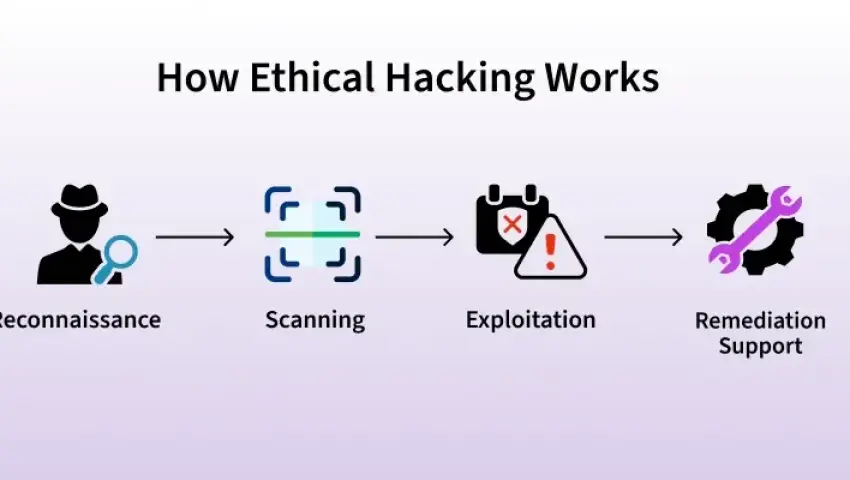
Ethical hacking plays a crucial role in protecting digital systems from cyber criminals. Unlike malicious hackers, ethical hackers use their skills legally to identify vulnerabilities in networks, websites, and applications before they can be exploited. With the rapid growth of digital platforms, cybercrime has become more advanced, making ethical hacking an essential part of modern cybersecurity.
1. Proactive Threat Detection
Ethical hacking focuses on identifying security weaknesses before they are discovered by cyber criminals. By continuously testing systems, networks, and applications, ethical hackers help organizations stay one step ahead of potential threats and reduce the chances of cyber attacks.
2. Real-World Attack Simulation
Ethical hackers use the same tools and techniques as malicious hackers to simulate real cyber attacks. This helps organizations understand how an actual attack might occur and how well their security systems can handle such threats in real scenarios.
3. Improved Data Protection
By discovering and fixing vulnerabilities early, ethical hacking strengthens data security. This protects sensitive information such as customer details, financial records, and business data from leaks, breaches, and unauthorized access.
4. Support for Law Enforcement & Investigations
Ethical hackers play an important role in assisting law enforcement agencies during cybercrime investigations. They help analyze digital evidence, trace attack sources, and improve cybersecurity frameworks used to prevent future crimes.
5. Increased Cyber Awareness & Training
Ethical hacking promotes cybersecurity awareness by educating individuals, employees, and organizations about common cyber threats. Through training programs and workshops, people learn safe online practices and understand how to respond to cyber incidents effectively.
Mrityunjay Singh
Leave a comment
Your email address will not be published. Required fields are marked *