
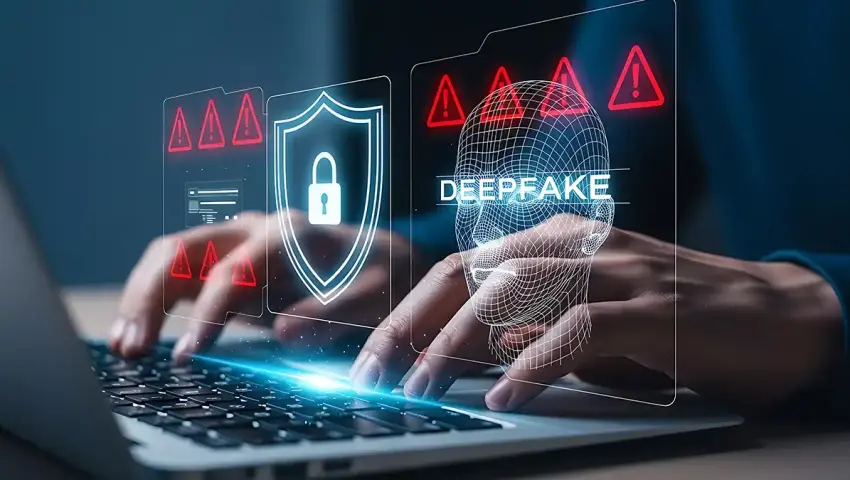
How Fraudsters Use AI & Deepfakes to Commit Financial Crimes
-
 By Mrityunjay Singh
 - BLOGS
- Jan 16, 2026
- 4 minutes read
- 302 Views
Technology is moving fast, and unfortunately, criminals are moving even faster. One of the biggest threats in recent years is the misuse of Artificial Intelligence (AI) and Deepfake technology for financial fraud.
Earlier, scammers relied on fake emails or phone calls. Today, they can copy your voice, create fake videos, and impersonate trusted people so realistically that even smart and educated individuals get fooled.
Let’s understand how these frauds work, real examples, and how you can protect yourself.
What Is AI & Deepfake Technology (In Simple Words)
AI tools can now:
- Clone human voices using short audio clips
- Create realistic fake videos of people
- Write convincing messages and emails
- Mimic speaking styles, tone, and facial expressions
Deepfake means fake content that looks and sounds real.
Criminals use this technology to pretend to be someone you trust and manipulate you emotionally or urgently.
1. Deepfake Voice Call Scams (Fake Boss / Fake Relative)
This is one of the fastest-growing frauds.
How the Scam Works
- Fraudsters collect voice samples from social media, YouTube, or WhatsApp
- AI clones the voice within minutes
- Victim receives a call that sounds exactly like:
- Their boss
- A family member
- A company director
The caller says:
“This is urgent. Transfer money immediately. I’ll explain later.”
Because the voice feels real, victims don’t question it.
Who Is Targeted
- Office employees handling payments
- Accountants
- Business owners
- Elderly parents
2. Deepfake Video Call Fraud
Fraudsters now use fake video calls where the face and voice both look real.
Common Examples
- Fake police officer on video asking for verification
- Fake bank officer demanding KYC update
- Fake relative on a video call asking for emergency money
Sometimes, the video looks slightly unnatural, but pressure and fear stop people from noticing details.
3. AI-Powered Phishing Messages
AI has completely changed phishing scams.
Earlier phishing messages:
- Had spelling mistakes
- Looked suspicious
Now AI messages:
- Are perfectly written
- Use your name and details
- Sound polite, official, and urgent
Examples:
- Fake income tax notices
- Fake bank alerts
- Fake company HR emails
Victims click links and enter:
- Login credentials
- Card details
- OTPs
4. Fake Investment Advisors Using AI
AI is also used in investment scams.
Fraudsters:
- Create fake social media profiles
- Use AI chatbots to talk like experts
- Show fake dashboards and profits
Victims are convinced they are dealing with:
- Professional traders
- Company representatives
- Financial advisors
Once large money is deposited, accounts are blocked.
5. AI-Generated Customer Support Scams
Many fake customer support numbers now use AI voice bots.
Victims searching for:
- Bank support
- Wallet support
- E-commerce help
End up talking to:
- AI-powered fake agents
- Very polite and professional voices
They guide victims to:
- Install remote access apps
- Share OTPs
- Approve fake refunds
Why AI-Based Fraud Is So Dangerous
AI fraud is dangerous because:
- It feels personal
- It sounds trustworthy
- It creates panic and urgency
- It removes human suspicion
Victims later say:
“I knew something was wrong, but it sounded so real.”
Real-Life Impact of Deepfake Financial Fraud
Many real cases show:
- Companies losing crores due to fake CEO calls
- Families losing savings due to fake emergency calls
- Employees transferring money under pressure
Even trained professionals have fallen victim.
How to Protect Yourself from AI & Deepfake Fraud
1. Never Act on Urgency Alone
Fraudsters always say:
- “Do it now”
- “Don’t tell anyone”
- “This is confidential”
Pause and verify.
2. Verify Through a Second Channel
If you get:
- A call from your boss → Call them back directly
- A message from a relative → Ask a personal question
- A video call → End and recheck
3. Set a Family or Office Verification Code
Create a secret word or question only trusted people know.
4. Limit What You Share Online
- Avoid posting voice notes publicly
- Limit personal videos
- Make social media private
The less data criminals have, the harder cloning becomes.
5. Banks & Police Never Ask for OTPs
No bank, police, or government officer:
- Asks for OTP
- Requests PIN
- Demands money over call
What To Do If You Fall Victim to AI-Based Fraud
- Immediately contact your bank
- Call cyber crime helpline 1930
- Report on cybercrime.gov.in
- Save call recordings, messages, screenshots
- Visit cyber police station
Fast action increases chances of money recovery.
Role of Police & Forensic Tools in AI Fraud Cases
Police use:
- Voice comparison tools
- Call metadata analysis
- IP tracking
- Transaction trail analysis
- Device forensics
Deepfake cases are complex, but digital evidence always leaves traces.
Final Thoughts
AI is powerful—but in the wrong hands, it becomes dangerous.
Deepfake fraud is not science fiction anymore. It is happening right now, and anyone can be a victim.
Awareness is the strongest defense.
If something feels urgent, emotional, or secret—stop and verify.
Mrityunjay Singh
Leave a comment
Your email address will not be published. Required fields are marked *