
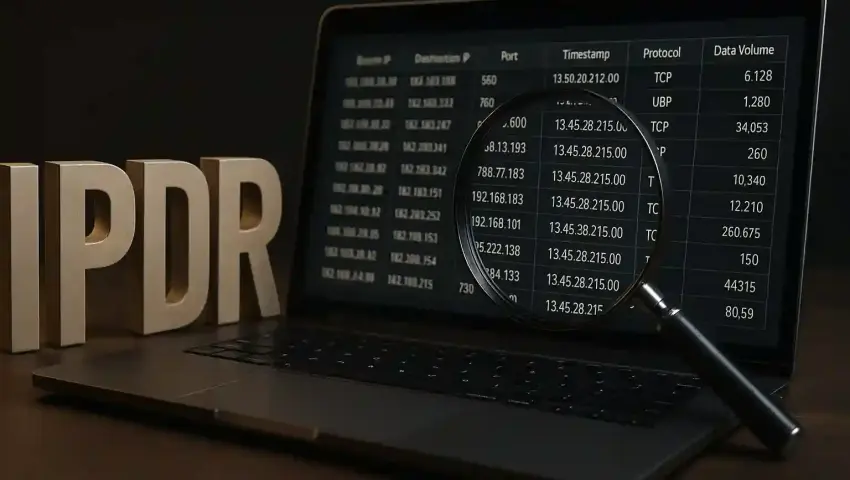
What is an Internet Protocol Detail Record (IPDR)? A Complete Guide to IPDR in Cybercrime Investigations
-
 By Mrityunjay Singh
 - BLOGS
- Jul 25, 2026
- 4 minutes read
- 128 Views
Learn what an Internet Protocol Detail Record (IPDR) is, what information it contains, how it is used in cybercrime investigations, its limitations, and why it is a critical source of digital evidence.
What is an Internet Protocol Detail Record (IPDR)?
An Internet Protocol Detail Record (IPDR) is a technical log maintained by Internet Service Providers (ISPs) and telecom operators that records metadata about a user's internet sessions. Unlike a Call Detail Record (CDR), which focuses on voice calls and SMS, an IPDR captures information related to internet connectivity and network usage.
IPDRs play a crucial role in cybercrime investigations, helping investigators identify the internet connection used during online activities and establish a timeline of digital events.
Important: An IPDR records network metadata, not the content of websites, emails, or messages.
How Does an IPDR Work?
Every time a device connects to the internet through a mobile network or broadband connection, the service provider logs technical information about that session.
These records help operators manage networks and, when legally authorized, assist law enforcement agencies in investigating cyber incidents.
An IPDR typically records:
- Assigned IP address
- Internet session start and end time
- Data usage
- Network identifiers
- Device-related information
What Information Does an IPDR Contain?
A standard IPDR may include:
- Public IP Address
- Private IP Address
- Assigned IP Address
- Source IP Address
- Destination IP Address
- Port Number
- Session Start Time
- Session End Time
- Session Duration
- Data Usage (Upload/Download)
- Access Point Name (APN)
- Mobile Number or Subscriber ID
- IMEI (Device Identifier)
- IMSI (Subscriber Identifier)
- Network Type (4G, 5G, LTE, Wi-Fi, etc.)
- Telecom Operator Details
Note: The exact fields available may vary depending on the telecom operator, ISP, and applicable legal requirements.
Why is IPDR Important?
IPDRs help investigators understand how a device accessed the internet and provide technical evidence that can support cybercrime investigations.
They are valuable for:
- Reconstructing internet activity timelines
- Associating an IP address with a subscriber at a specific time
- Correlating online events with other digital evidence
- Supporting digital forensic analysis
- Identifying network usage patterns
How IPDR is Used in Cybercrime Investigations
IPDRs are widely used in investigations involving internet-based crimes.
1. Online Banking Fraud
IPDRs help investigators determine which internet connection was used during unauthorized transactions.
2. Phishing Attacks
They assist in identifying IP addresses associated with phishing websites or fraudulent login attempts.
3. Social Media Investigations
IPDRs can help establish when an account was accessed and from which assigned IP address.
4. Cyber Harassment and Cyberstalking
Investigators use IPDRs to correlate internet sessions with reported incidents of online abuse or harassment.
5. Identity Theft
IPDR analysis can help trace internet sessions linked to unauthorized access of online accounts.
6. Ransomware and Malware Investigations
Network session records may assist investigators in understanding communication between infected devices and remote servers.
Can an IPDR Reveal Live Location?
No.
An IPDR is generally a historical technical record. It does not provide live GPS tracking or continuous real-time location monitoring.
It records network session information and IP address assignments during internet connectivity.
Does an IPDR Contain Browsing History?
No.
An IPDR does not normally contain:
- Website page content
- Google search history
- WhatsApp chats
- Email content
- Social media messages
- Photos or videos
- Passwords
- Files stored on a device
It records metadata about internet sessions rather than the actual content transmitted.
Who Can Access an IPDR?
IPDRs contain sensitive subscriber and network information.
Access is generally restricted under applicable telecommunications, privacy, and legal frameworks. They are typically available only to authorized law enforcement agencies or other entities following the required legal procedures.
Advantages of IPDR Analysis
IPDR analysis helps investigators:
- Associate IP addresses with subscribers
- Build internet activity timelines
- Correlate network sessions with cyber incidents
- Support digital forensic investigations
- Verify login activity
- Strengthen technical evidence in cybercrime cases
Limitations of IPDR
Although IPDRs are valuable, they have important limitations.
An IPDR cannot typically provide:
- Website content
- Chat messages
- Email contents
- Passwords
- Live GPS location
- Browser history details
- Files transferred or stored
- Voice recordings
Therefore, investigators usually analyze IPDRs alongside other forms of digital evidence.
Digital Evidence Used Alongside IPDR
To develop a comprehensive understanding of an incident, investigators often correlate IPDRs with:
- Call Detail Records (CDR)
- Mobile device forensic reports
- Server logs
- Firewall logs
- Email headers
- Authentication logs
- Bank transaction records
- Cloud service logs
- CCTV footage
- Device forensic analysis
Combining multiple evidence sources helps establish accurate timelines and strengthen investigative findings.
Best Practices for IPDR Analysis
Digital forensic investigators typically:
- Verify timestamps
- Match IP addresses with subscriber records
- Correlate network sessions with reported events
- Analyze session duration
- Review data usage patterns
- Compare IPDRs with server and application logs
- Validate findings using additional digital evidence
Conclusion
An Internet Protocol Detail Record (IPDR) is one of the most important sources of technical evidence in modern cybercrime investigations. It provides valuable metadata about internet sessions, IP address assignments, and network connectivity without revealing the actual content of communications.
When combined with Call Detail Records (CDRs), forensic analysis, server logs, and other digital evidence, IPDRs help investigators reconstruct online activity and support lawful cybercrime investigations.
Mrityunjay Singh
Leave a comment
Your email address will not be published. Required fields are marked *